ROBE house
ROBE, SOUTH AUSTRALIA
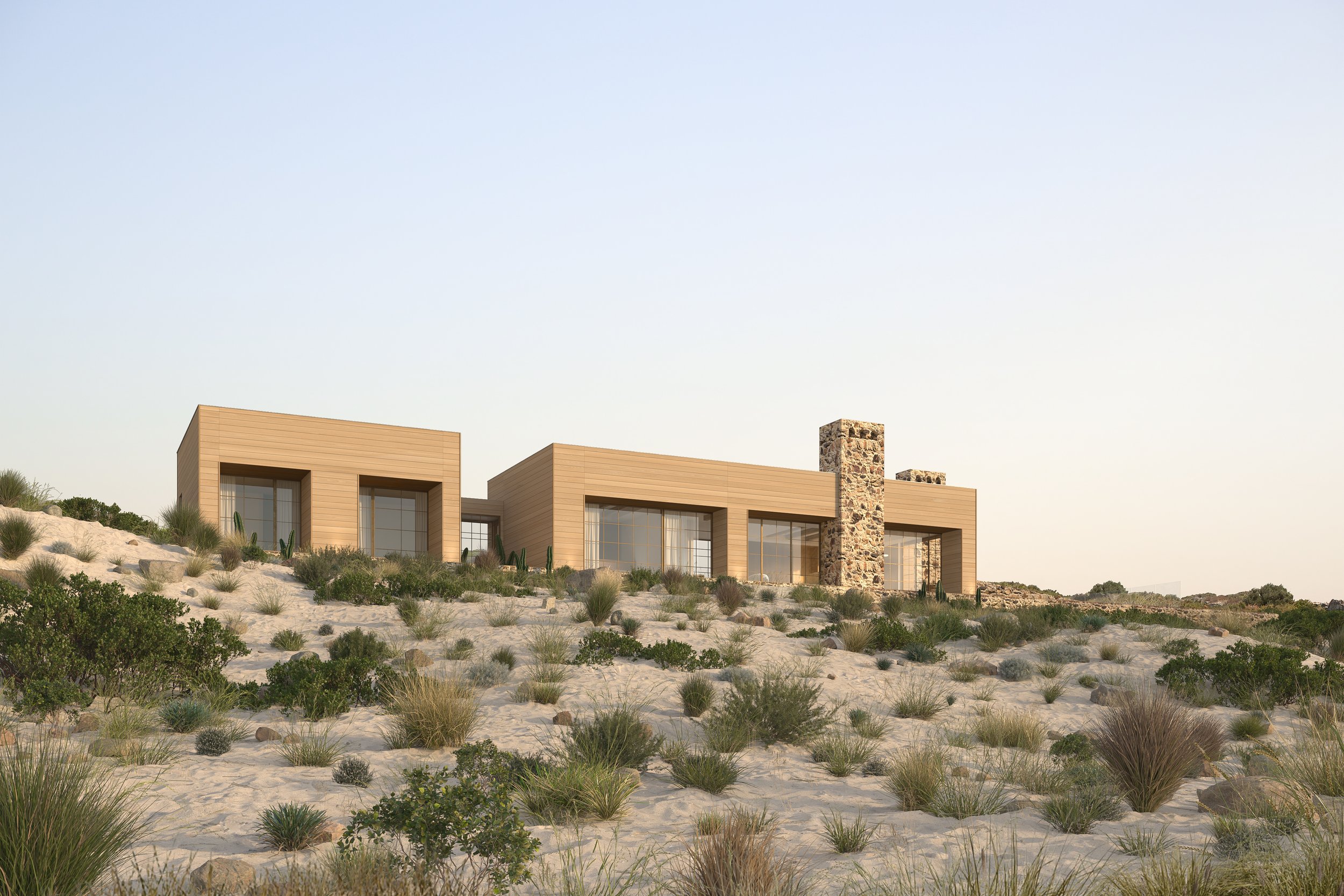
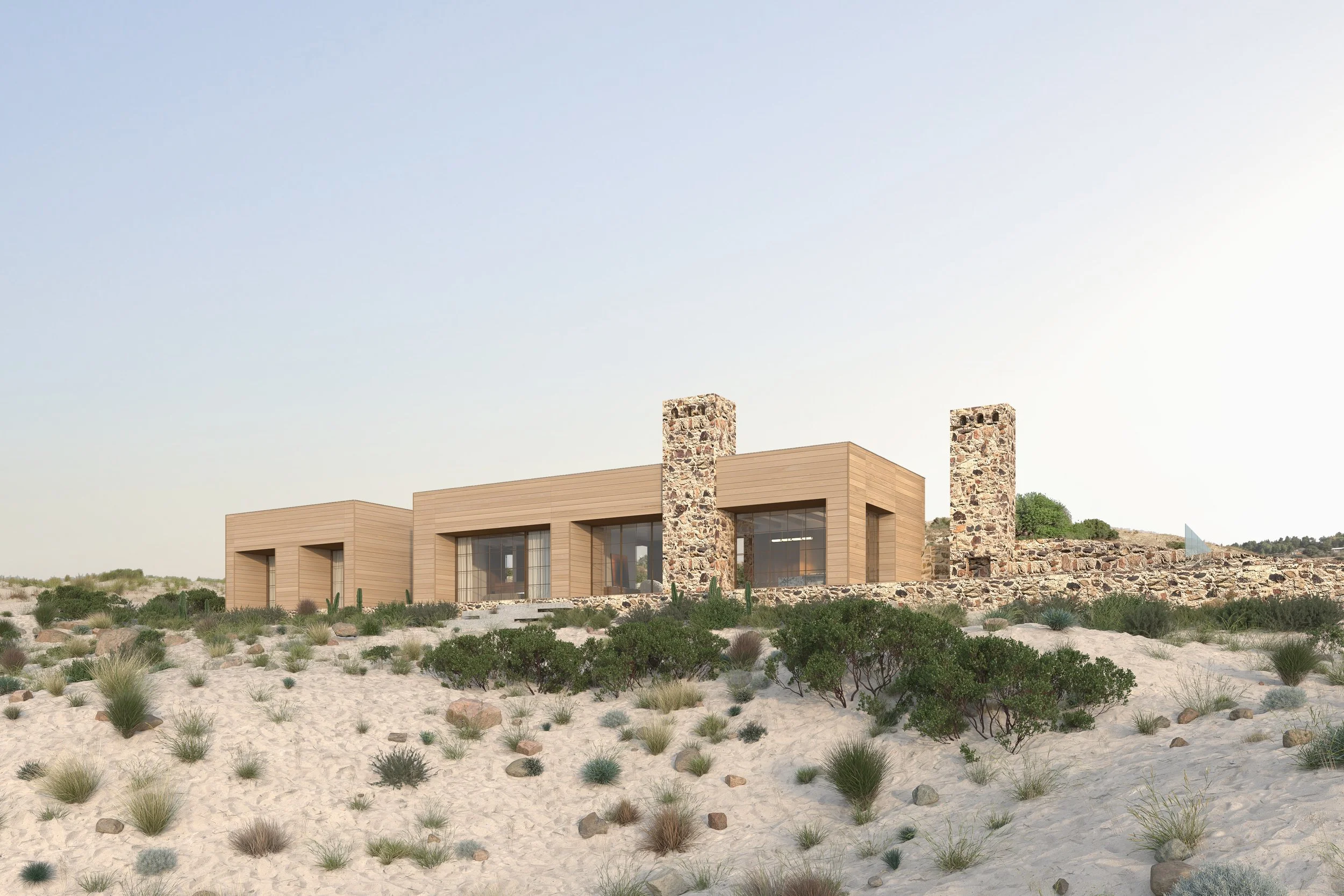
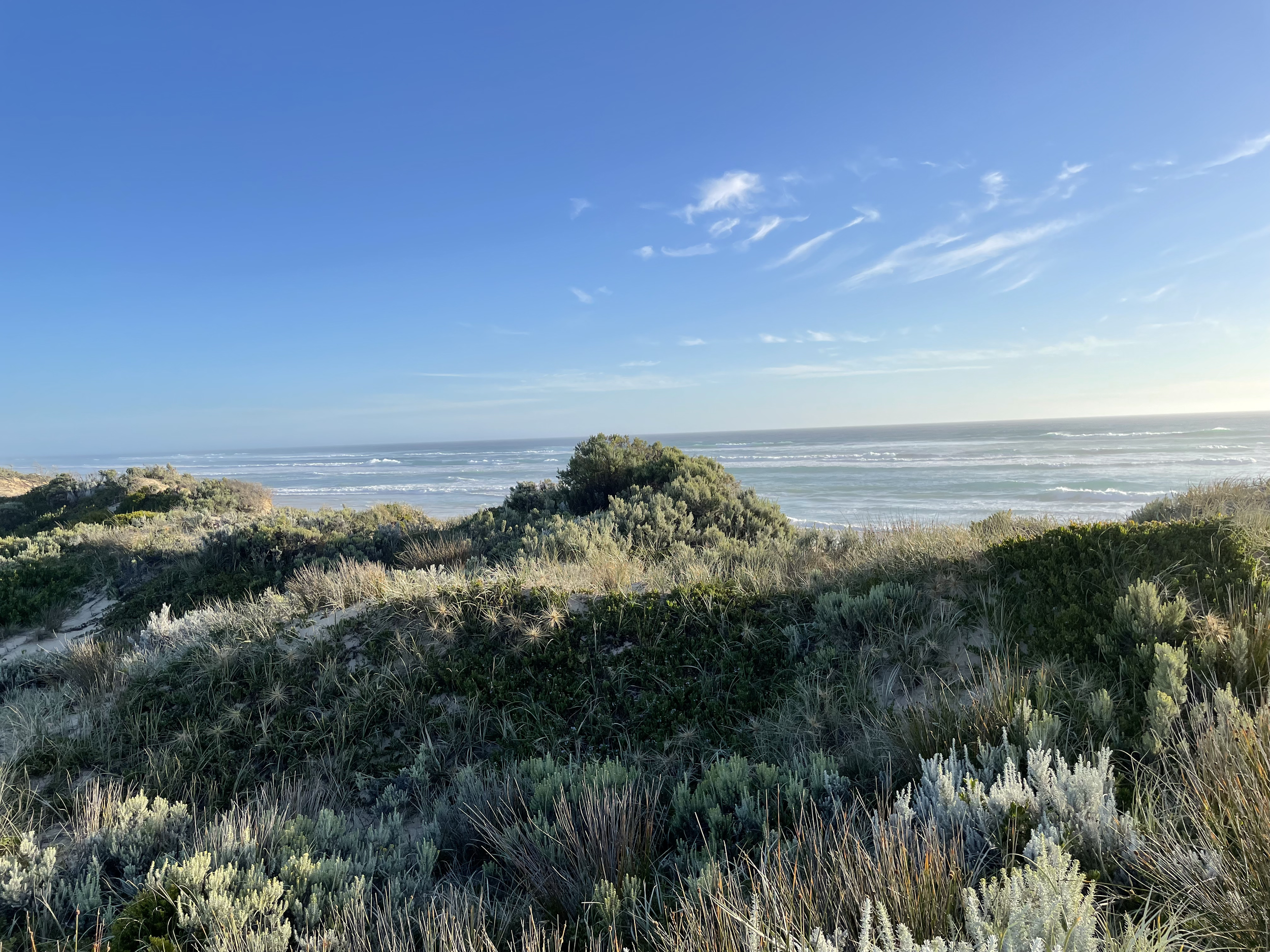
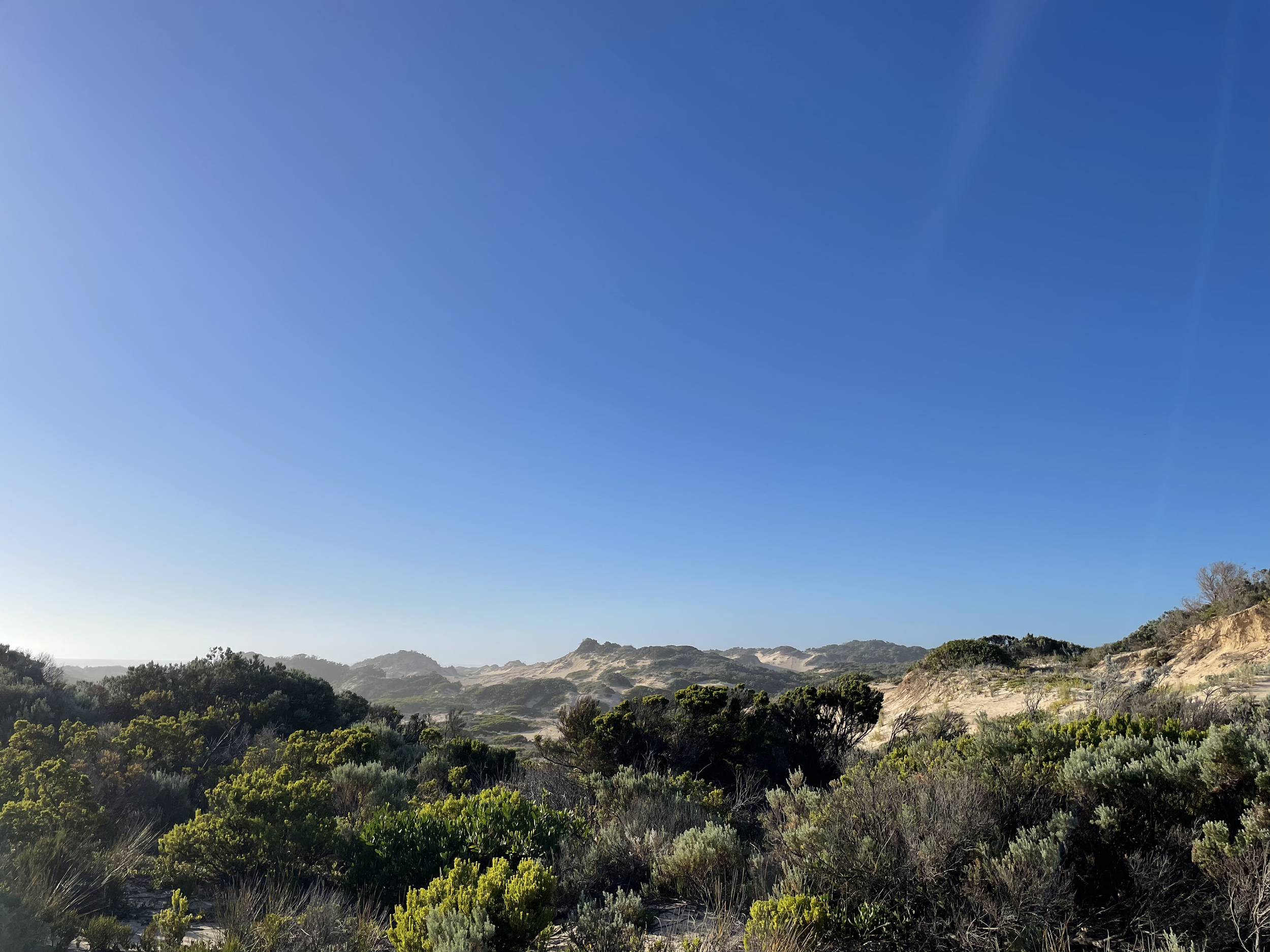
Set within the shifting sand dunes of Robe’s rugged coastline, the house is conceived as a quiet but grounded response to its environment—anchored, resilient, and deeply connected to place. The form embraces the raw beauty of the weathered coast, where salt-laden winds, bleached grasses, and the ever-changing light inform both materiality and form.
The building presents as a series of bold, low-slung volumes that emerge from the landscape rather than sit upon it. These forms are deliberately simple and robust, designed to withstand the coastal conditions while echoing the elemental character of the surrounding dunes and rocky outcrops. Solid walls of dry stack stonework provide a sense of permanence and shelter, their texture and tone drawing directly from the local geology.
In contrast, expanses of steel-framed windows are carefully positioned to frame views of the ocean and sky, inviting light deep into the interiors while offering moments of pause and connection to the horizon. These openings are both protective and expressive—recessed and proportioned to balance exposure with refuge.
Externally, the house is wrapped in blue gum cladding, selected for its ability to gracefully weather over time. Left untreated, the timber will soften into silvery-grey tones, mirroring the driftwood scattered along the shoreline and allowing the building to further recede into its setting as it ages.
The overall composition is one of quiet strength and restraint—an design that does not compete with its surroundings, but instead settles into them, shaped by climate, material honesty, and a deep respect for the coastal landscape.
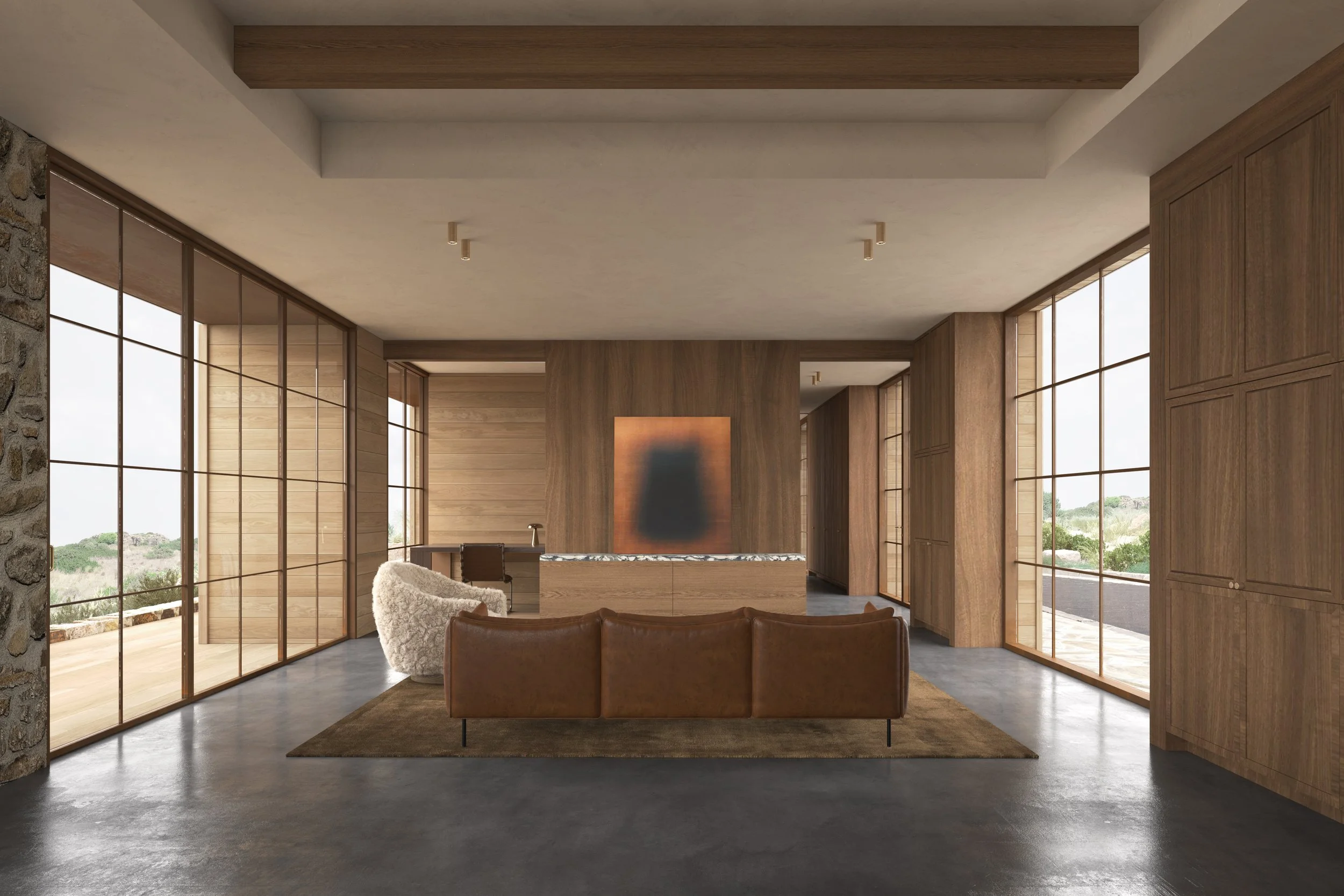
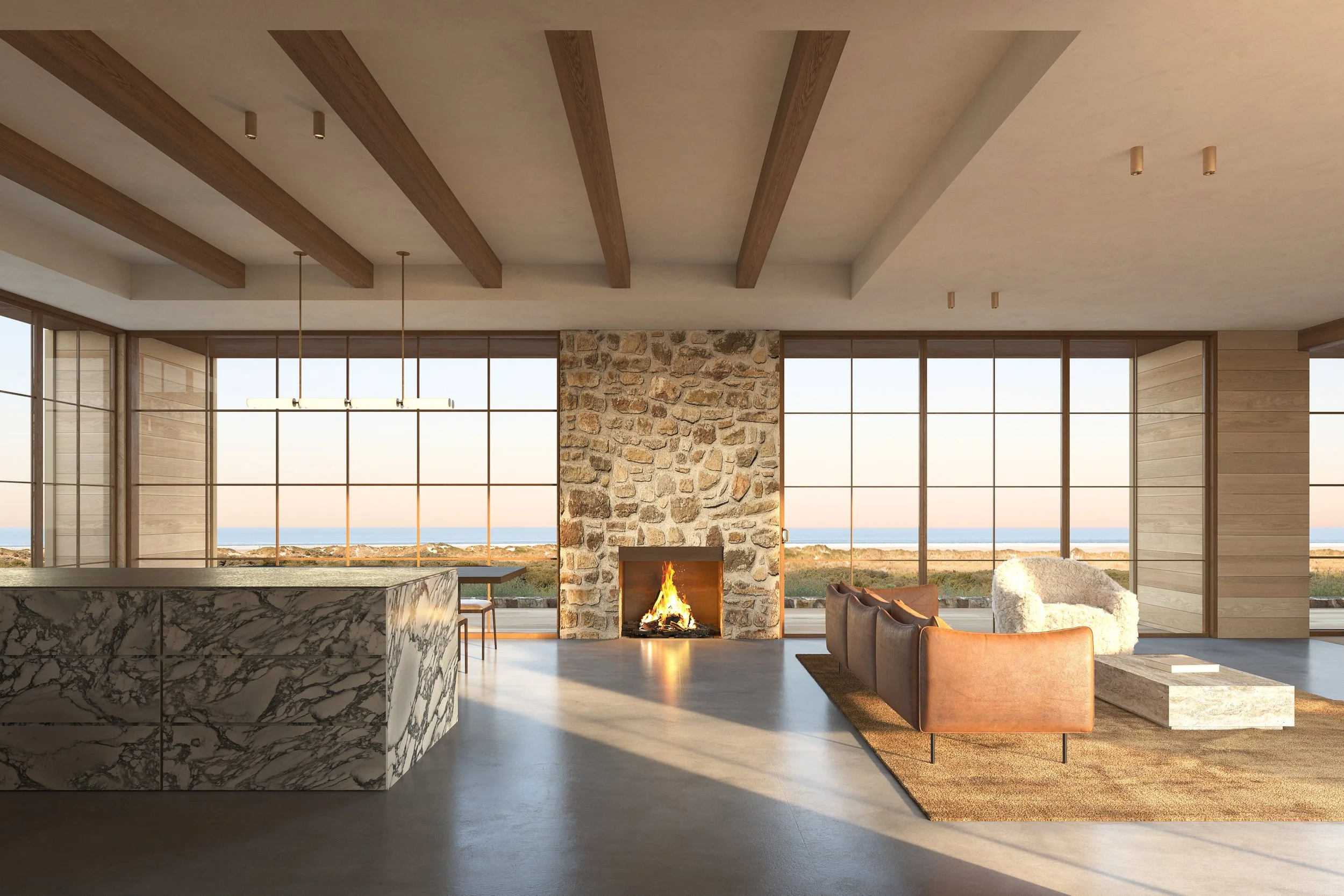
Inside, the house continues its dialogue with the coastal landscape through a palette that is both restrained and tactile—grounded in natural materials, yet softened with moments of refinement. The interior is defined by simplicity of form, allowing texture, light, and detail to carry the experience.
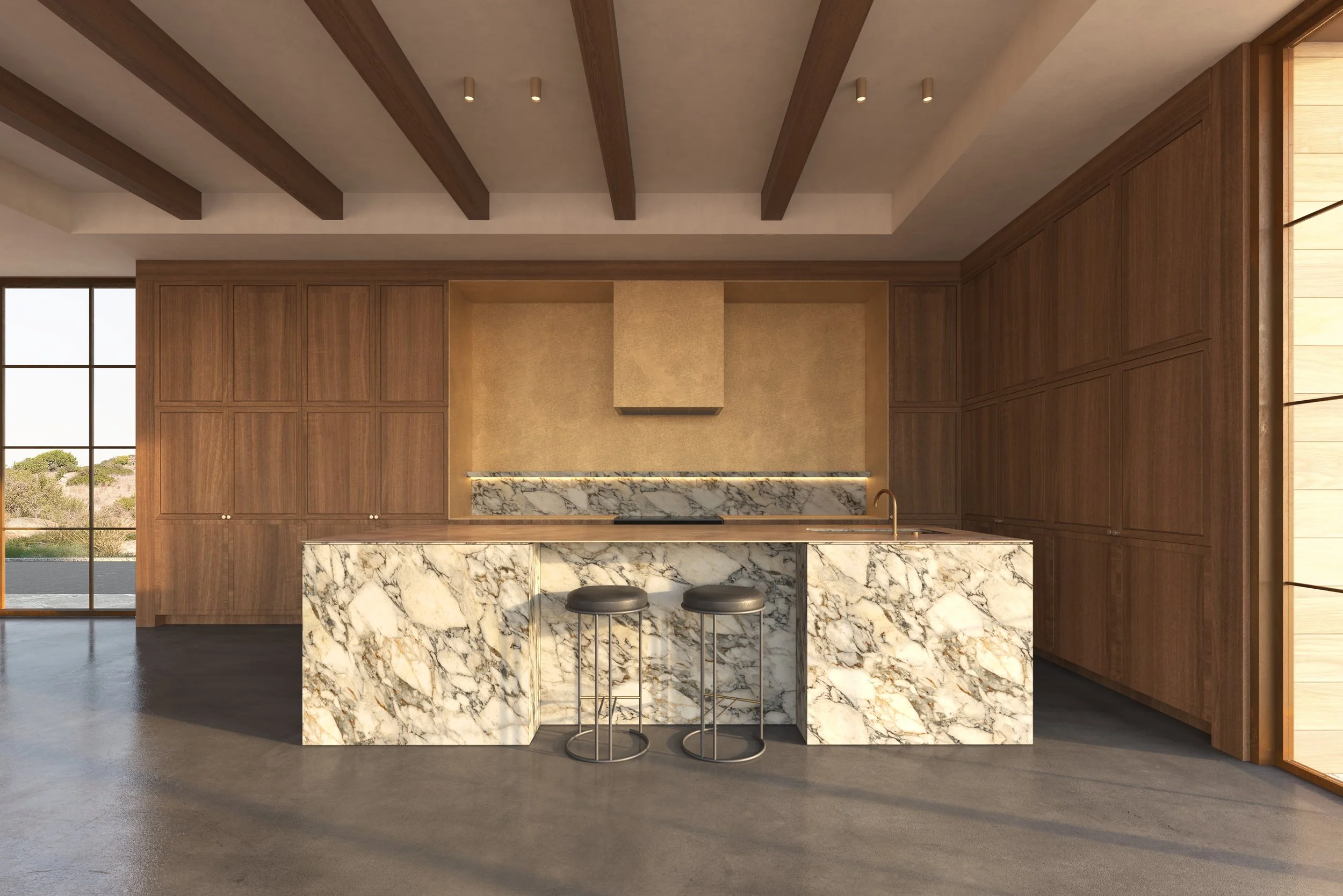
At the heart of the home, a monolithic stone island anchors the kitchen—solid and sculptural, it reads almost as a continuation of the exterior dry stack language brought indoors. Behind it, a stone backsplash rises with quiet confidence, paired with a finely detailed brass overhead element that introduces a subtle warmth and delicacy. These brass accents—precise and understated—catch and reflect the shifting daylight, offering a gentle contrast to the otherwise muted palette.
Cabinetry is resolved in timber veneer, its grain adding softness and a sense of craft to the space. The tones are warm but subdued, sitting comfortably alongside the cooler, burnished concrete floor. This flooring, with its slightly desaturated, coastal hue, grounds the interior while reflecting light in a way that enhances the calm, atmospheric quality of the rooms.
Above, exposed structural beams trace the rhythm of the building, their presence honest and unadorned. Between them, a lime-washed ceiling diffuses light and tempers the rawness of the structure, lending a quiet softness that echoes the coastal sky. Steel-framed windows punctuate the walls, framing glimpses of dune, sea, and horizon. Through them, natural light enters gently—never harsh, but filtered and constantly shifting. It moves across the stone, timber, and concrete surfaces throughout the day, creating a subtle play of shadow and reflection that animates the otherwise still interior.
The result is a space that feels both grounded and serene—an interior shaped by material honesty, careful restraint, and a sensitivity to the changing coastal light.
Visualisation
MF Studio